
The Bitter Truth About “Brown Furniture” and Grand Pianos
The Valuation Gap: Why Sentiment Doesn't Always Equal Dollars at Auction
We’ve all been there: you’re clearing out a family estate, looking at a solid oak dining set or a majestic upright piano, and thinking, "This cost a fortune in 1980, it must be worth thousands now."
At Farmer Auctions, we love a good find. But part of our job is providing a reality check on the current secondary market. The truth is that most used furniture and pianos are currently seeing a "valuation gap" between sentimental value and market demand.
Here is why your treasures might not bring the windfall you expected—and what actually moves the needle.
1. The Piano Problem: A Heavy Burden
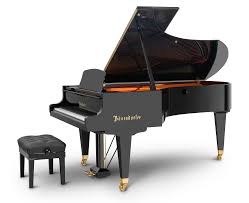
Pianos are perhaps the most difficult items to sell in the modern auction world. Unless it is a Steinway & Sons, a Bösendorfer, or a high-end Yamaha, pianos often struggle to find bidders.
Maintenance Debt: A piano that hasn't been tuned or climate-controlled in a decade often requires thousands of dollars in restoration.
The "Free" Factor: On sites like Facebook Marketplace, people give away upright pianos for free just to get them out of the house. This makes it very hard to drive competitive bidding at auction.
The Size Constraint: Modern homes are smaller, and "piano rooms" are becoming a thing of the past. If it’s not a concert-grade instrument, it’s often viewed as a 500-pound piece of furniture that is expensive to move.
2. The Shift in "Brown Furniture"
For decades, heavy, dark wood furniture was the gold standard. Today, the market has shifted dramatically toward Mid-Century Modern (MCM) or minimalist designs.
Lifestyle Changes: Today’s buyers are mobile. They want furniture that is easy to move and fits into an apartment. That massive 12-foot breakfront or the triple-pedestal dining table simply doesn't fit the modern lifestyle.
Formal is "Out": Formal dining rooms are being converted into home offices. Consequently, the demand for formal China cabinets and high-back chairs has plummeted.
The Exception to the Rule: Quality Still Speaks
While the general market is soft, exceptional quality still commands a premium. This is where brands like Henkel Harris, Stickley, and Kittinger come in.
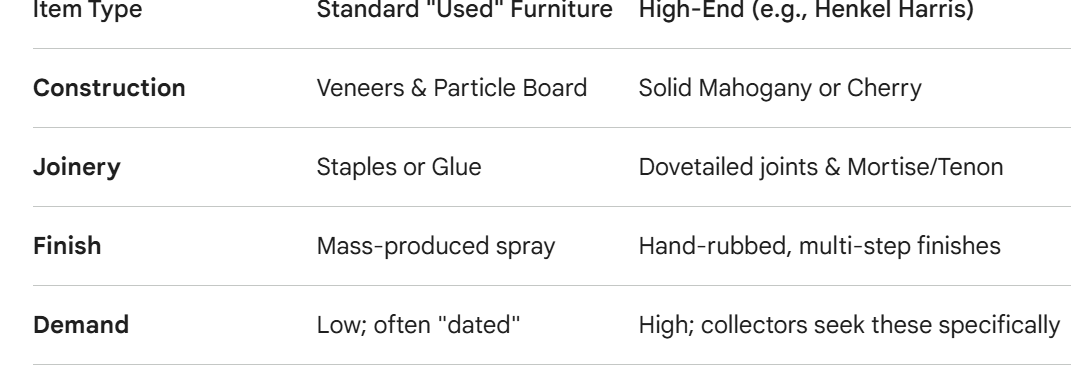
A Henkel Harris sideboard isn't just "brown furniture"—it’s a masterpiece of American cabinetry. Collectors know these pieces were built to last 200 years. If you have name-brand, high-end colonial reproductions or designer pieces, the "rules" of the soft market don't apply to you.
How to Maximize Your Value at Auction
If you are looking to sell, here are three tips to ensure you get the best possible price:
- Identify the Maker: Look for stamps inside drawers or labels on the back. A brand name can be the difference between $50 and $500.
- Condition is King: Scratches can be buffed, but structural damage or heavy pet odors can ruin an auction's potential.
- Be Realistic: Understand that auction prices reflect what a buyer is willing to pay today, not what was paid in 1995.
The Bottom Line: If you have a house full of furniture, don't despair! While the market has changed, there is a buyer for everything. Our goal at Farmer Auctions is to find the right audience for your specific items—whether they are everyday essentials or rare Henkel Harris gems.