
Black History Month: Black Artisans of Salem and Roanoke, VA
Provenance of a Community: Honoring African American Creators in Salem and Roanoke
As an auction house, we understand that every object tells a story—not just of its own utility, but of the hands that shaped it. This Black History Month, Farmer Auctions is proud to look inward at our own "backyard," highlighting the incredible African American craftsmen and artists who built the architectural and cultural foundation of Salem and Roanoke, Virginia. From the bricklayers who shaped the skyline to the modern painters documenting a changing city, these creators have turned raw materials into a lasting legacy.
The Hidden Architects: Enslaved Artisans of Salem
Long before the established art galleries of today, the aesthetic of Salem was being forged by skilled African American laborers. Recent research by the Center for Studying Structures of Race at Roanoke College has shed light on the "Authors and Architects" of the region—the enslaved people whose craftsmanship remains visible in the very bricks of Salem’s historic buildings.
- The Deyerle Masons: Enslaved brick masons, managed by local contractors Joseph and J.C. Deyerle, were responsible for the iconic masonry of Roanoke College's original Administration Building and Miller Hall.
- The Tinsmiths: The intricate tin roofs that protected these historic structures were likely installed by skilled laborers enslaved by Abraham Hupp, a founding member of the college’s board.
- Legacy in Stone: These weren't just laborers; they were technical experts in masonry, carpentry, and metalwork whose names—like Archy Queman and Clary Fleming—are finally being restored to the historical record.
Capturing a Lost World: David Ramey’s Roanoke
Moving into the 20th century, our focus shifts from the physical construction of buildings to the preservation of community memory through art. David Ramey (1939–2017) was a self-taught artist and a crucial social historian for the Roanoke Valley. Working primarily with colored pencils, graphite, and ink, Ramey documented the vibrant life of the Gainsboro and Northeast Roanoke neighborhoods before they were largely dismantled by "urban renewal" in the mid-century. Ramey’s work, often featured at the Harrison Museum of African American Culture and the Taubman Museum of Art, provides a meticulous visual record of the Henry Street business district—capturing everything from the steam engines of the Norfolk and Western Railway to the quiet dignity of everyday neighbors. 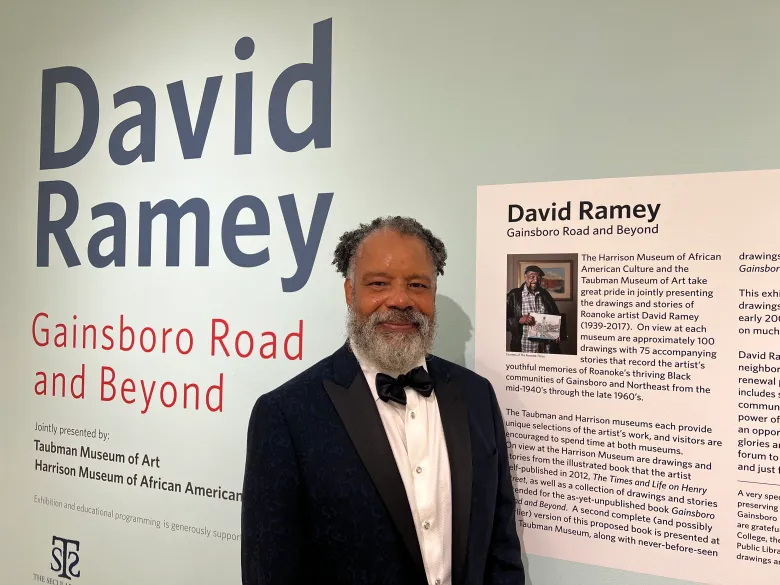
Modern Visionaries: Continuing the Craft
The tradition of African American artistry in the Roanoke Valley is a living, breathing legacy. Today’s artists continue to use their craft to bridge the gap between historical memory and modern identity:
- Antoinette Hale: A true pillar of the Roanoke art scene, Hale’s paintings are more than just visual works; they are cultural anchors. Her pieces, which celebrate Black life and heritage, are prominently featured in the City’s public art collection, ensuring her perspective remains a permanent part of our local landscape.
- Bryce Cobbs: Specializing in powerful murals and portraiture, Cobbs has become a household name for his ability to make history unmissable. From the Henrietta Lacks statue to the sweeping "Heart of Gainsboro" mural, his large-scale works serve as a bold reminder of the figures who shaped our community.
- Dyke Wood: A Roanoke native, Wood brings a different perspective through Abstract Expressionism. By focusing on the interplay of color and raw emotion, his work explores the depths of the African American experience in a way that transcends literal representation, inviting the viewer into a deeply personal dialogue.
Why This Matters to the Auction World
At Farmer Auctions, we see the value in the "provenance of a community." When we handle a piece of regional furniture or a local painting, we are handling a piece of this collective history. Understanding that the very mortar of our town was mixed by master craftsmen whose names were once omitted from the ledgers allows us to appreciate our local treasures with a deeper, more authentic perspective.
How You Can Explore More:
- Visit: The Harrison Museum of African American Culture in Roanoke.
- Walk: Take the Hidden in Plain Site virtual or walking tour of Gainsboro.
- Observe: The next time you walk past a pre-Civil War brick building in Salem, look closer at the hand-pressed masonry. You are looking at the work of the region's first great artisans.
Have questions? We would love to hear from you. Or, check out our website: www.farmer-auctions.com.